THE RED BRIDGE
Brick: The Bridge Between Two Parallel Worlds
Where architecture meets ceramics, and matter begins to give way to light
A Material Between Worlds
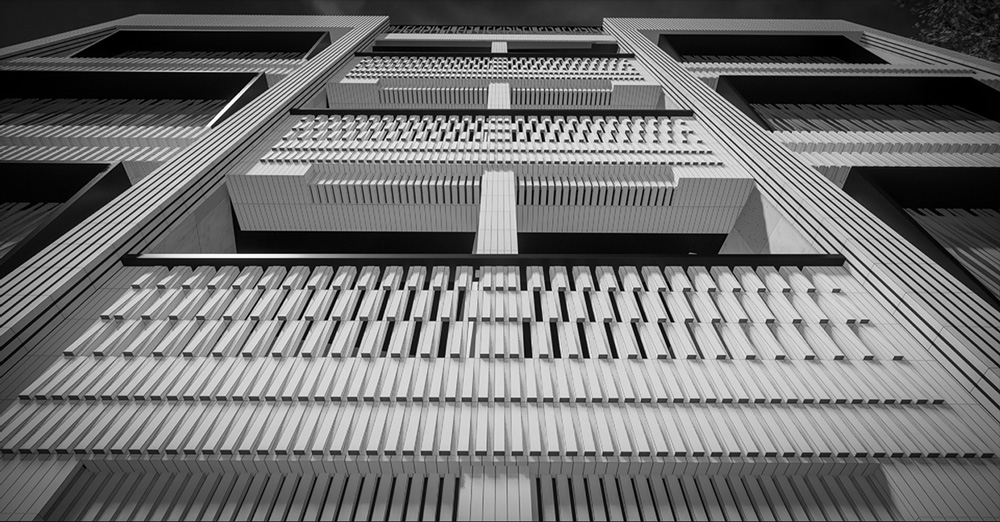
For me, brick begins with earth. But it does not end there.
Between architecture and ceramics, brick occupies a unique position. It belongs to the world of construction, yet it is born from the same earth that becomes clay in the hands of the ceramic artist.
This dual nature has made brick more than a building material in my practice. It has become a bridge between two parallel worlds: the world of architecture and the world of the object; the scale of space and the scale of the hand; structure and form.
What interests me is not simply the brick itself, but the transformation it represents
earth becoming structure, structure becoming space, and material becoming experience.
THE ARCHITECTURAL ROOT
The Architecture of Light
Iranian architecture taught me to see brick not as a solid mass, but as a material capable of shaping light.
Across centuries, brick has been used to construct walls, vaults, screens, openings, and rhythms of shadow. Its power often lies not in what it occupies, but in what it allows to remain empty.
Through repetition, proportion, depth, and carefully placed voids, brick can filter light, frame it, redirect it, and give it spatial presence.
This relationship between material and light became one of the foundations of my own way of seeing.
The brick does not always need to dominate the space.
Sometimes, its greatest role is to step aside and allow light to become visible.
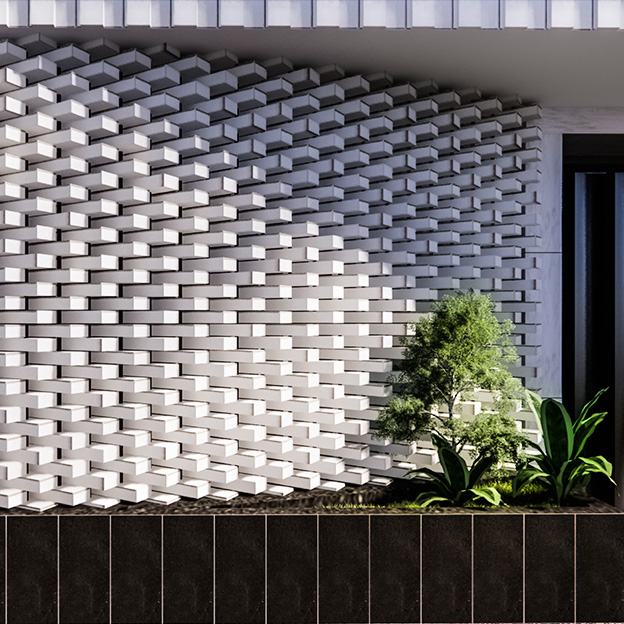
Sometimes, its greatest role is to step aside and allow light to become visible
THE BRIDGE
Brick: The Bridge Between Two Parallel Worlds
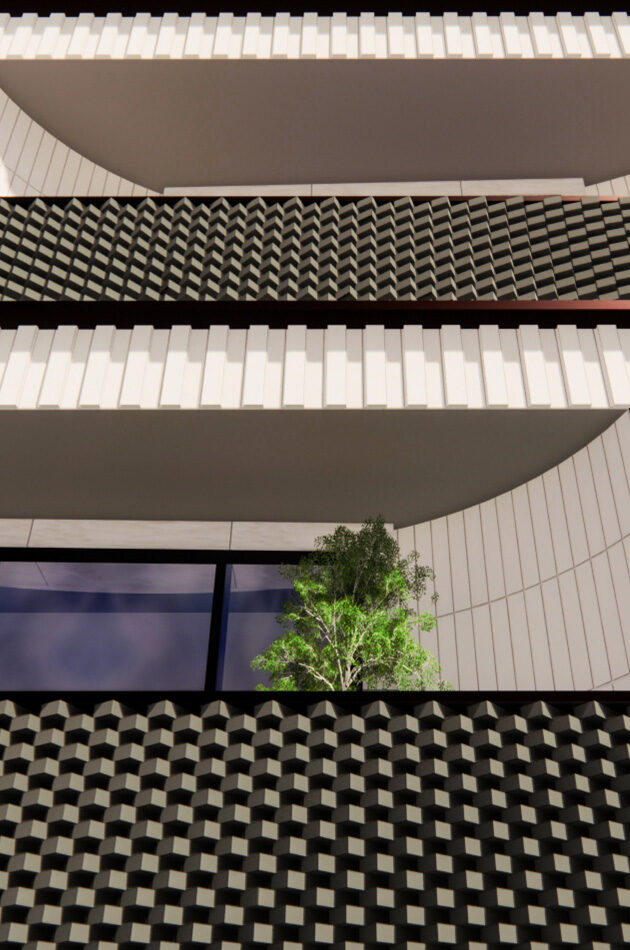
Brick stands between two scales of making.
On one side is architecture — the world of walls, structures, buildings, and inhabited space.
On the other is ceramics — the world of the hand, the object, the surface, and the intimate scale of material.
Brick belongs to both.
Architectural in scale and ceramic in origin, it can construct a wall, define a threshold, shape a pattern, or become an autonomous form in its own right.
For me, this makes brick a bridge between two parallel worlds, rather than a boundary between disciplines.
The same material logic that can generate a building can also give rise to an object.
The scale changes.
The intention changes.
The relationship with space changes.
But the underlying language remains.
FROM UNIT TO SPACE
The Unit of Thought
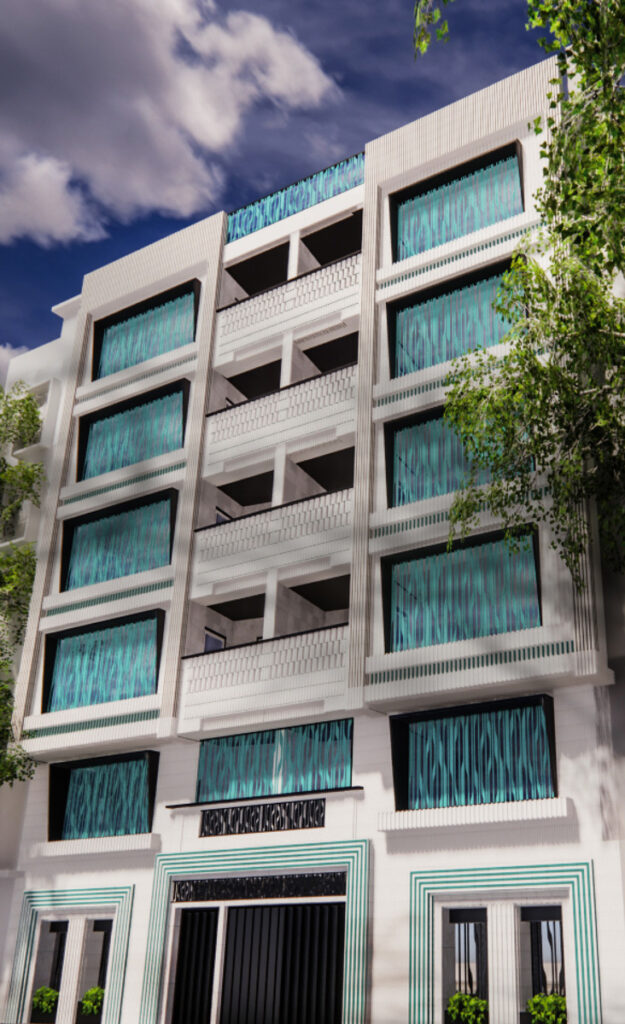
A brick is one of the smallest constructive units of architecture.
Yet within a single unit lies the potential for an entire spatial language.
Through repetition, displacement, rotation, accumulation, and void, the individual brick becomes structure. Structure becomes rhythm. Rhythm becomes space.
This is where my architectural thinking meets my ceramic practice.
I am interested in how a simple material unit can move across scales — from the hand to the wall, from the object to the building, from matter to space.
The unit may be small
The possibility is not
FROM BRICK TO CERAMIC
From Earth to Light
My ceramic practice continues this investigation through another transformation of earth.
Clay enters the fire and emerges as ceramic. Through the addition of metallic lustre, its surface acquires another relationship with light — reflecting it, absorbing it, and changing with it.
Here, material is no longer simply something to look at.
It becomes something through which light can be experienced.
This is where the architectural language of brick meets the material language of ceramics.
Both begin with earth.
Both are transformed through fire.
Both can shape our experience of space.
The scale may change — from the wall to the hand, from architecture to the object — but the underlying inquiry remains the same:
How can matter become a medium for light?
FROM BRICK TO CERAMIC
From Earth to Light
My ceramic practice continues this investigation through another transformation of earth.
Clay enters the fire and emerges as ceramic. Through the addition of metallic lustre, its surface acquires another relationship with light — reflecting it, absorbing it, and changing with it.
Here, material is no longer simply something to look at.
It becomes something through which light can be experienced.
This is where the architectural language of brick meets the material language of ceramics.
Both begin with earth.
Both are transformed through fire.
Both can shape our experience of space.
The scale may change — from the wall to the hand, from architecture to the object — but the underlying inquiry remains the same:
How can matter become a medium for light?
MATERIAL / SPACE / LIGHT
Matter Becomes Space
My practice moves between scales.
From the smallest unit of material to the structure of architecture.
From the surface of a ceramic form to the volume of a space.
From the physical presence of matter to the changing presence of light.
I am interested in the moment when material begins to exceed its physical boundaries — when a surface can suggest depth, when repetition can create rhythm, and when structure can begin to define space.
This movement is not a separation between disciplines.
It is a continuous journey.
Matter becomes form.
Form becomes space.
Space becomes an experience of light.
RED BRIDGE AS A PERSONAL POSITION
A Bridge Within the Practice
Red Bridge is not an isolated project.
It represents a position within my broader practice — a way of moving between architecture, ceramics, material, and space without treating them as separate territories.
Architecture gives me an understanding of structure and space.
Ceramics gives me an intimate understanding of material and transformation.
Light connects them.
Brick stands between them.
It is the red bridge through which different scales, materials, and disciplines can meet.
For me, the significance of brick lies not only in what it builds, but in what it makes possible:
a continuous movement from earth to material, from material to form, and from form to space.
.ARCHITECTURE. CERAMICS. MATERIAL. LIGHT. SPACE
Different scales.
Different forms.
One continuous inquiry.
The same logic that can raise a wall can give birth to a sculpture.
The same material can become structure, surface, object, or space.
What changes is the scale.
What remains is the inquiry.
Architect of Light, Sculptor of Space
THE JOURNEY CONTINUES
Beyond Brick
The investigation does not stop with brick.
It continues through ceramic objects, architectural space, surfaces, structures, and the changing behavior of light.
Different works may begin with different materials.
Some may begin with architecture.
Some with clay.
Some with a fragment, a surface, or a simple unit.
But they return to the same questions:
How can light, matter, structure, and space come together to shape perception and experience?
This is not a fixed destination.
It is an ongoing journey — moving between scales, materials, and forms, while following the same underlying language.
CONTINUE THE JOURNEY
.Architecture, Ceramics, Objects, Space
Different points along the same journey.
Light transforms matter.
Matter gives form to space.
Space shapes experience.
The journey continues.